
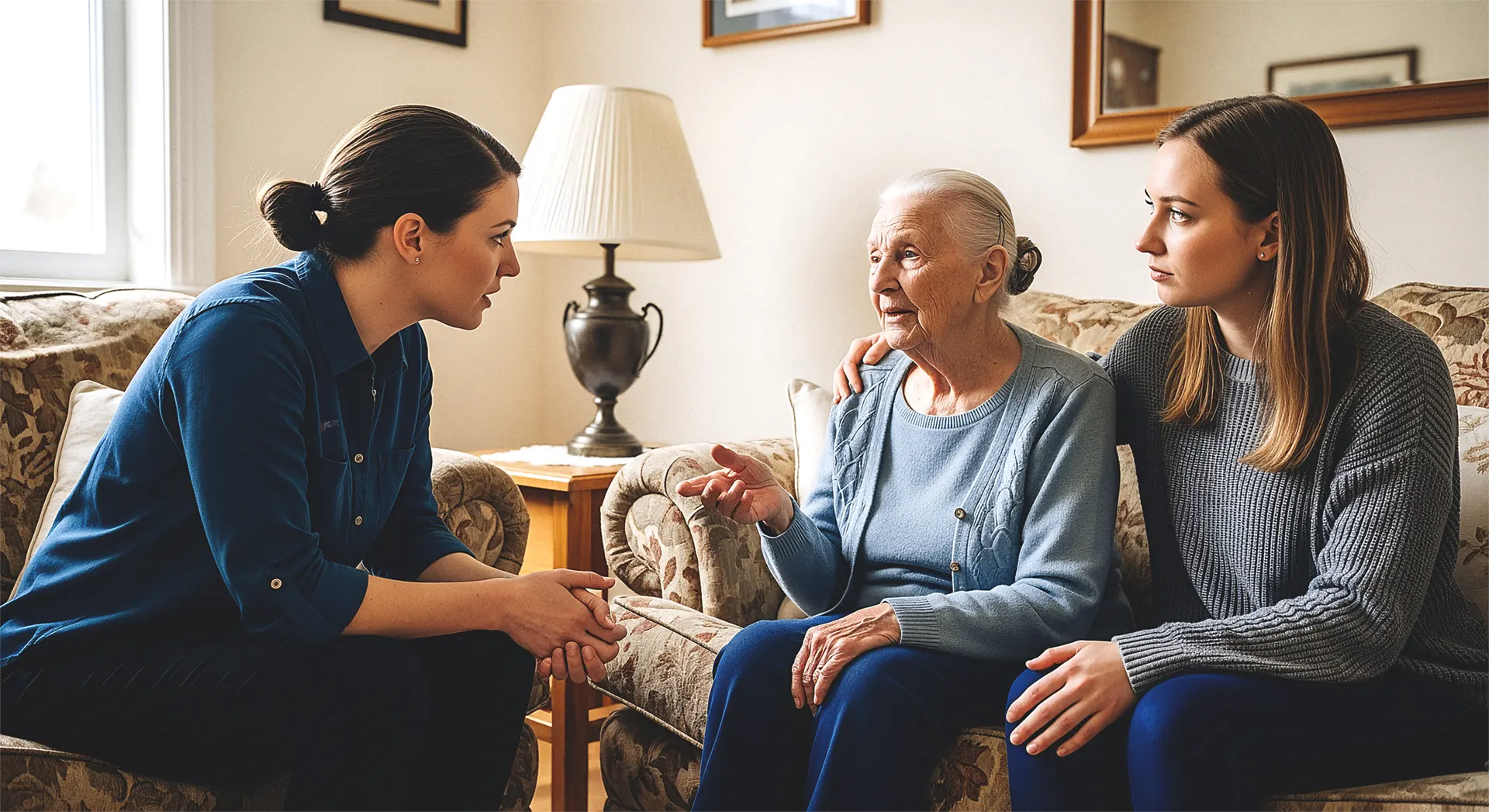
- Communication is essential to building trust and ensuring client-centred care.
- Regular updates and honest conversations align expectations and goals.
- Care Partners facilitate discussions between clients, families, and providers.
- Proactive communication helps resolve issues before they escalate.
- This article includes practical strategies for fostering effective dialogue.
In the context of Home Care Packages, communication is one of the most important tools a Care Partner can use.
Providing in-home aged care isn’t just about services, it’s about relationships. For older Australians to receive truly personalised support, open, ongoing communication between Care Partners and families is essential. It ensures that care plans remain responsive, decisions are collaborative, and the client’s best interests are always front and centre.
Why Communication Matters
Care Partners act as the primary bridge between clients, their families, and the wider care team. While they coordinate services and manage funding, they also:
- Align everyone on the goals of care
- Provide emotional and practical reassurance
- Prevent miscommunication among stakeholders
- Build long-term trust
Key reasons why communication is vital:
1. Building Trust and Confidence
Families feel more secure when they’re informed. Open communication fosters confidence in the care being delivered and reassures loved ones that their input is valued.
2. Ensuring Care Plans Are Personalised
Families can share insights about the client’s history, preferences, and personality that may not emerge in formal assessments. This knowledge helps Care Partners craft more meaningful care plans.
3. Addressing Concerns Early
Changes in mood, mobility, or memory may be noticed first by family members. With regular updates, Care Partners can address these changes quickly, before they lead to larger issues.
4. Supporting the Client’s Well-Being
Strong communication enables a team-based approach to care. When families and Care Partners work together, the client receives more consistent support, both emotionally and practically.
Best Practices for Effective Communication
To maintain productive relationships, clear communication guidelines should be established early. Here are key strategies:
Schedule Regular Check-Ins
Whether by phone, email, or in-person meetings, regular touchpoints keep everyone updated. These check-ins offer a space to raise concerns, review services, and celebrate progress.
Be Transparent and Honest
Care Partners should be open about what’s working and what’s not. Likewise, families should feel comfortable sharing concerns. Transparency helps prevent misalignment.
Listen Actively
Listening is about more than hearing, it’s about understanding the emotions and context behind what is said. Active listening builds empathy and leads to more thoughtful responses.
Encourage Feedback
Care Partners can ask open-ended questions like:
- “How do you feel about the care being provided?”
- “Is there anything you would like us to change or add?”
- “What do you think would improve your loved one’s day-to-day experience?”
This fosters shared problem-solving and continuous improvement.
Clarify Expectations
Misunderstandings often arise from unclear assumptions. Both parties should ensure they fully understand the care plan, funding allocations, and the roles of different service providers.
Overcoming Common Communication Challenges
Despite good intentions, challenges can arise. Being aware of them helps Care Partners respond thoughtfully.
Conflicting Family Opinions
Different family members may disagree on what’s best for the client. Care Partners can mediate by refocusing discussions on the client’s own wishes and using care planning frameworks to guide decisions.
Language and Cultural Barriers
In diverse communities, language and cultural differences may affect communication. Using interpreters or culturally responsive approaches ensures everyone is heard and respected.
Emotional Conversations
Aged care often brings up strong emotions: grief, guilt, fear. Care Partners should approach difficult conversations with patience, empathy, and professionalism, giving families space to process and respond.
Frequently Asked Questions (FAQs)
Raise concerns directly with your Care Partner. They are trained to listen and respond constructively. If the issue isn’t resolved, you can request a formal review or escalate to the provider.
The Care Partner’s role is to ensure that the client’s wishes remain central. They can help mediate discussions and provide professional guidance to find a compromise.
This depends on the client’s situation, but monthly check-ins are common. Families can also request updates whenever changes in health or circumstances occur.
Care Partners provide regular updates to authorised family members and document care changes clearly. They may also suggest tools such as care journals or communication apps.
Yes. Some families prefer a single point of contact, while others involve siblings or extended family. The communication plan can be tailored based on preferences.
- Assisted Living Advice
- Carer Support & Resources
- Dementia & Memory Support
- End-of-Life Care & Planning
- Family & Relationship Guidance
- Government Support & My Aged Care
- Health & Wellbeing
- Home Safety & Accessibility
- In-Home Care Tips
- Legal & Financial Planning
- Mental Health in Ageing
- Mobility & Exercise
- Nutrition for Seniors
- Tech & Tools for Seniors
- Transitioning to Aged Care
Final Thoughts
Communication is the backbone of effective in-home aged care. It fosters trust, builds collaboration, and ensures that everyone involved: clients, families, and providers, is aligned on what matters most.
In the Home Care Packages environment, strong communication leads to better care outcomes, higher satisfaction, and more empowered decision-making. When families and Care Partners work together with openness and respect, the result is a care experience that is truly personalised and dignified.